
Patented. Developed at JGU Mainz.
A new class of water treatment.
Water from heat.
No high-pressure pumps. Instead of pressing water through the membrane, HydroDefine draws it through. The system is modular and operates where the water stream is generated.
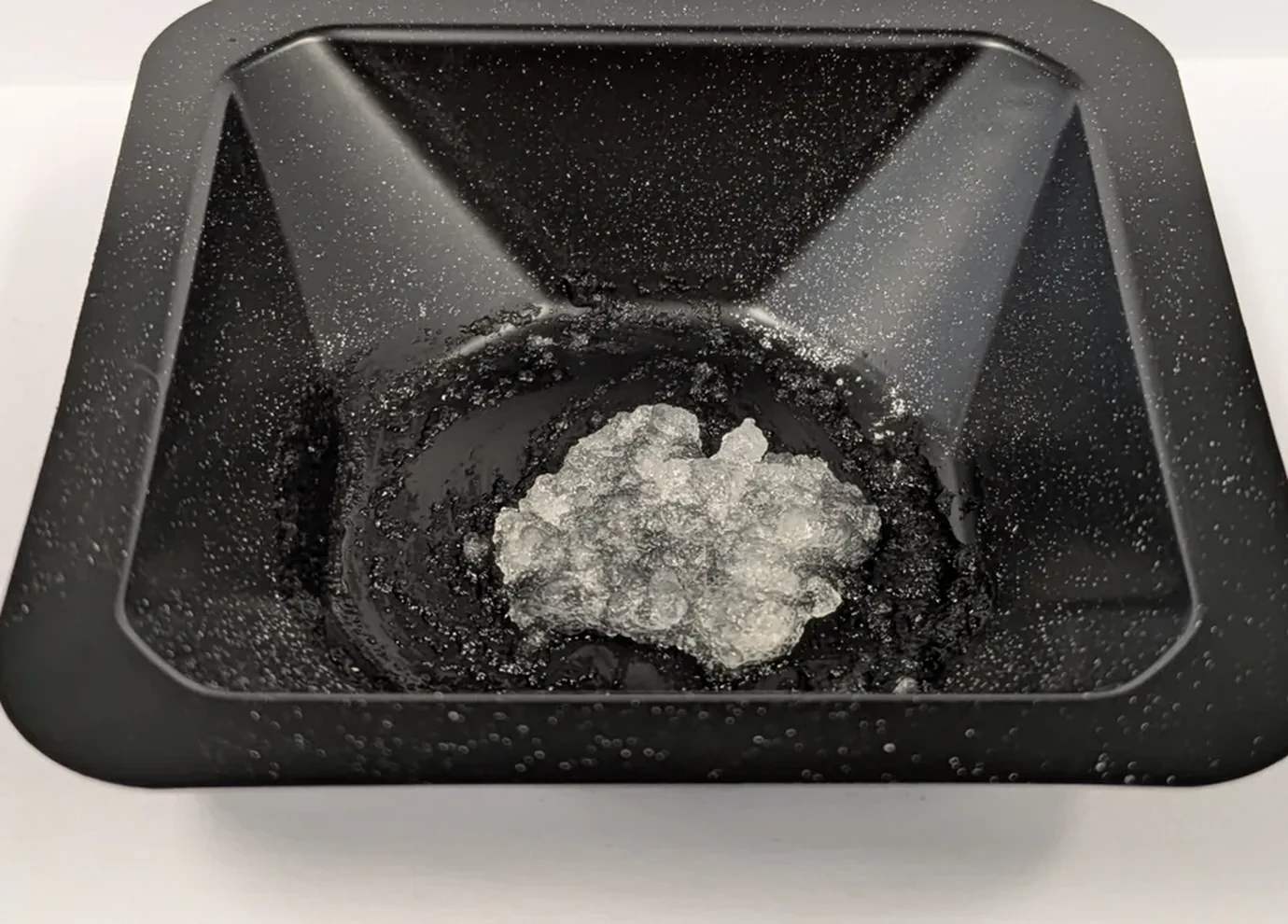
Water determines where people can live, where fields can be irrigated and where factories can be built. Water is becoming scarcer, even in Europe. At the same time, low-temperature heat goes unused in countless places.
Too much heat. Too little water.
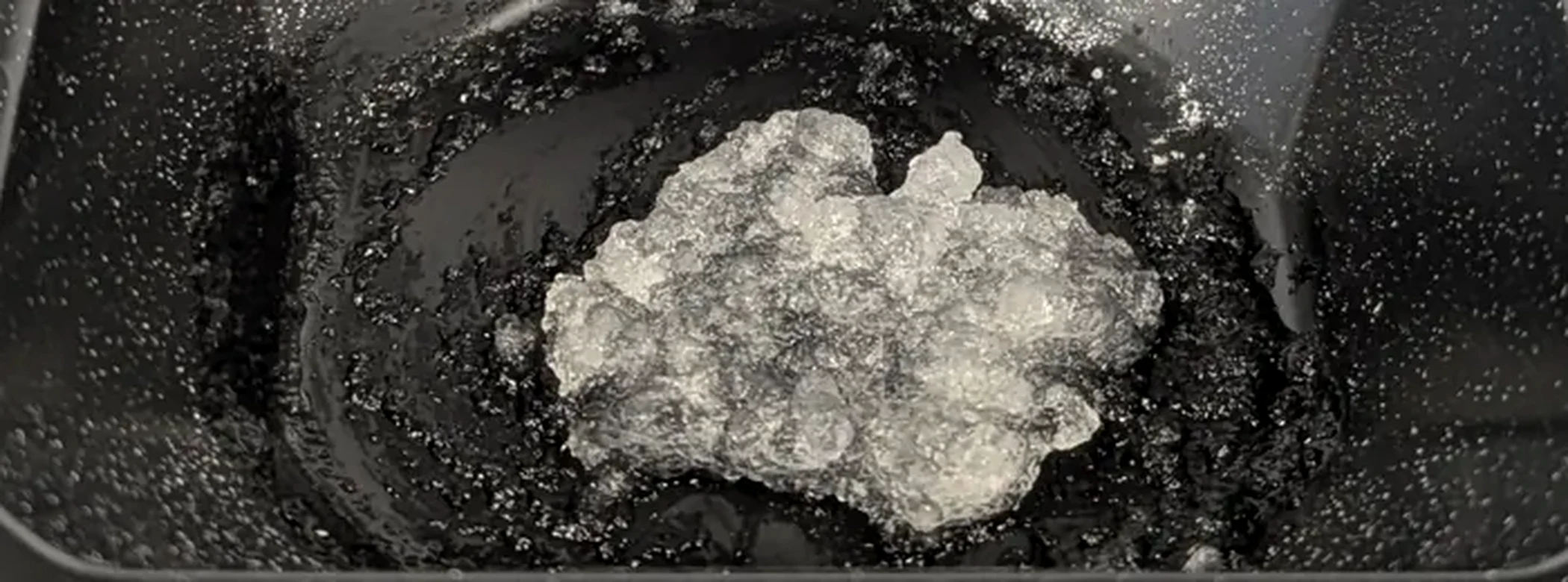
HydroDefine uses low-temperature heat to recover water from contaminated water streams.
What would be possible if water were no longer the limit?
We create balance. And shift the boundary.
What we know today
- 99.1 to 99.8% sodium chloride rejection
- 40 cycles with no loss of performance
- 20‑fold larger active membrane area
- Patent granted
Measurement conditions and details
Sodium chloride rejection: 99.1 to 99.8%, Lab, 2 to 10 g/L, TFC membrane, April 2026.
40 cycles, Lab, degree of swelling constant. The proof-of-principle annex documents the series but refers to the material there only as a hydrogel. The attribution to the bulk gel follows from the lab and material status at the time. Not a lifetime proof for the target material.
Active membrane area increased 20‑fold, with no discernible loss of flux. Lab, 4.9 to 100 cm².
Patent 10 2025 124 864, granted on 3 August 2026. International patent application PCT/EP2026/068278.
Deswelling window 50 to 70 °C, adjustable volume phase transition temperature.
TRL 3 today, target TRL 5 at the demonstrator, planned for 2028.
Where we begin
In electroplating and surface finishing, having rinse and process waters treated externally can cost 200 to 800 euros per cubic metre. Where treatment and disposal costs depend on volume, recovering water early can reduce downstream costs.
Search space and sources
4,183 industrial sites in Germany alone have heat available at 50 °C or above, totalling 93.3 TWh per year. These are not customers, but they define where we look.
Own analysis of the waste heat platform of the German Federal Office for Economic Affairs and Export Control, data as of 5 July 2026, sites with heat from 50 °C.
H2O GmbH: Efficient treatment of rinse waters in electroplating. Online guide, retrieved 22 August 2026.
HydroDefine is not built for a single contaminant or a single industry.
Depending on what is in the water, a different membrane may be needed. The hydrogel takes up the water and releases it again with low-temperature heat.
Electroplating is where we start. In other industries too, high water demand, contaminated water streams and low-temperature heat come together in the same place.
The textile industry shows what that can look like.
A dyehouse doesn't just dye fabric. It dyes water.
Dyeing uses a lot of water and process heat, and it leaves contaminated water behind. That is exactly where HydroDefine can come in.
Heat becomes water. Water makes new sites possible.
How HydroDefine works.
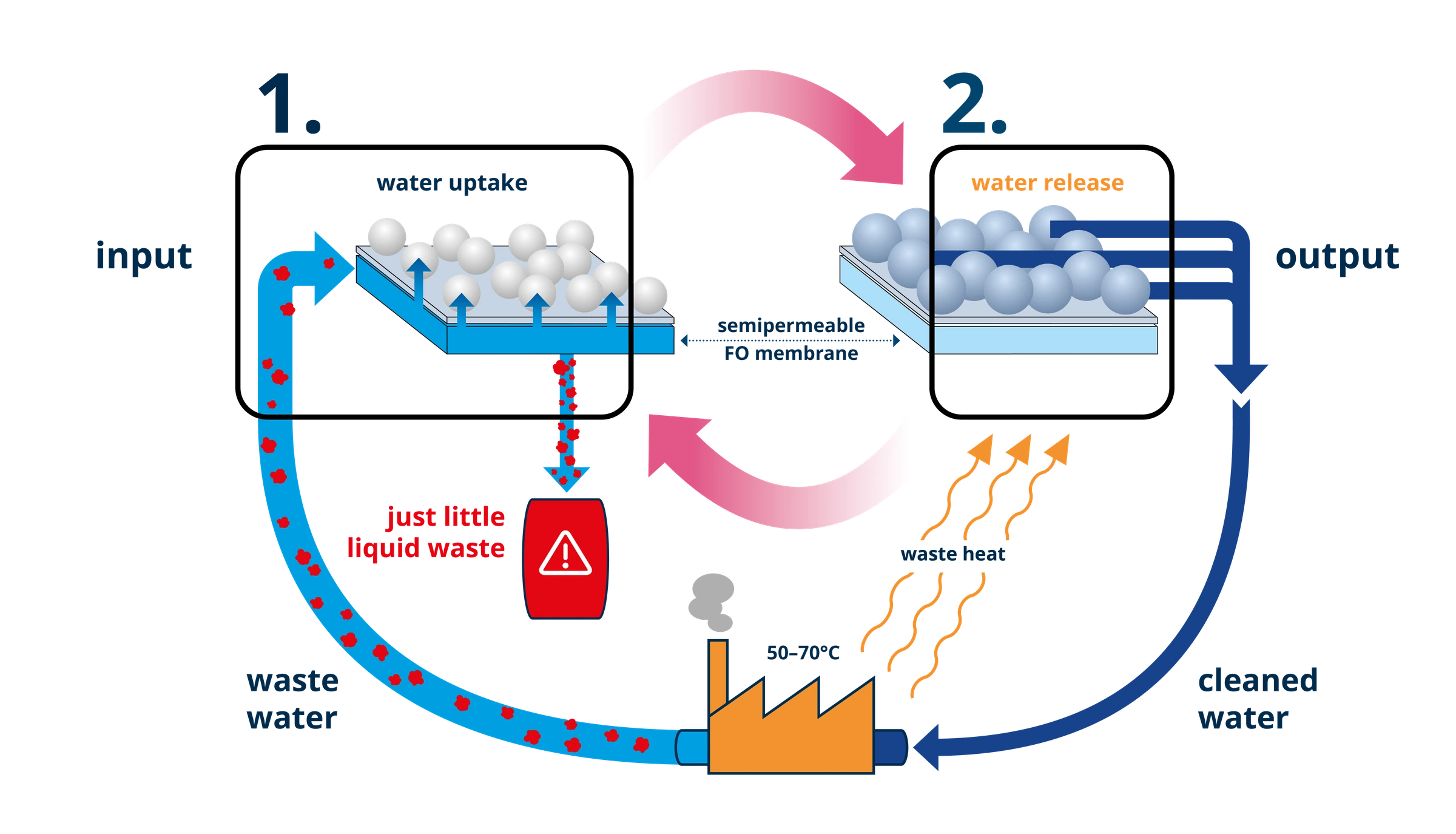
The hydrogel draws water through the membrane. Low-temperature heat then releases the water it has taken up.
How the hydrogel changes with temperature
Move the slider.
Schematic illustration.
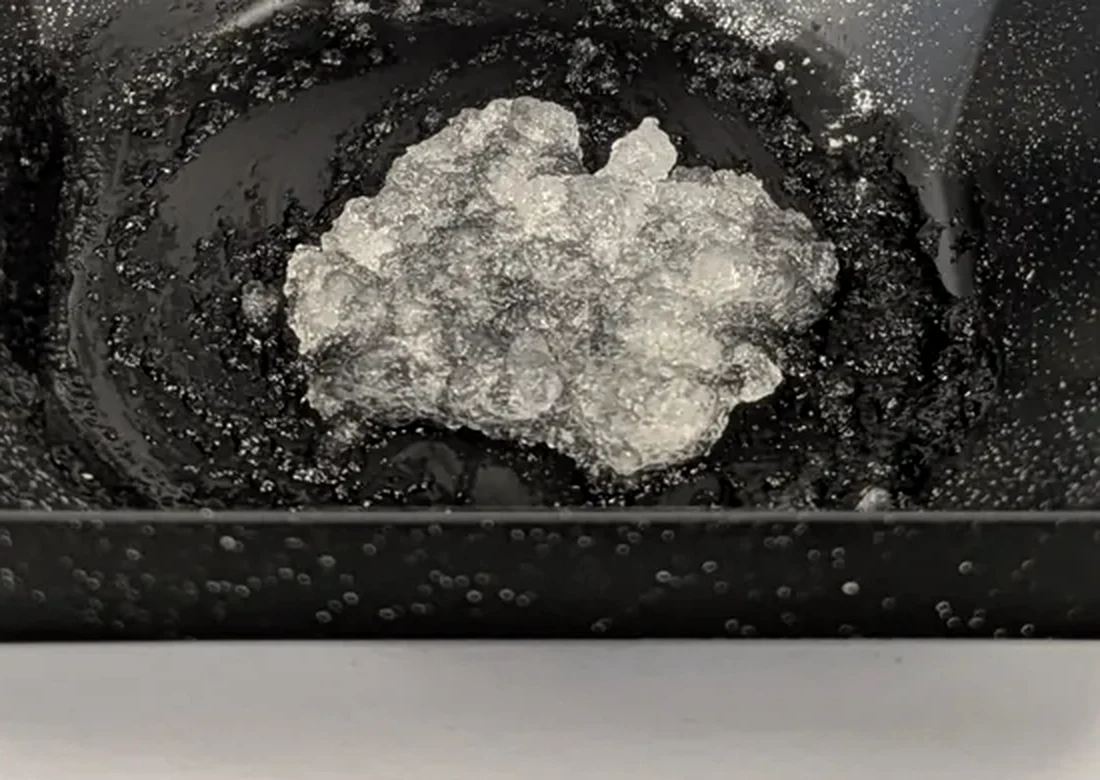
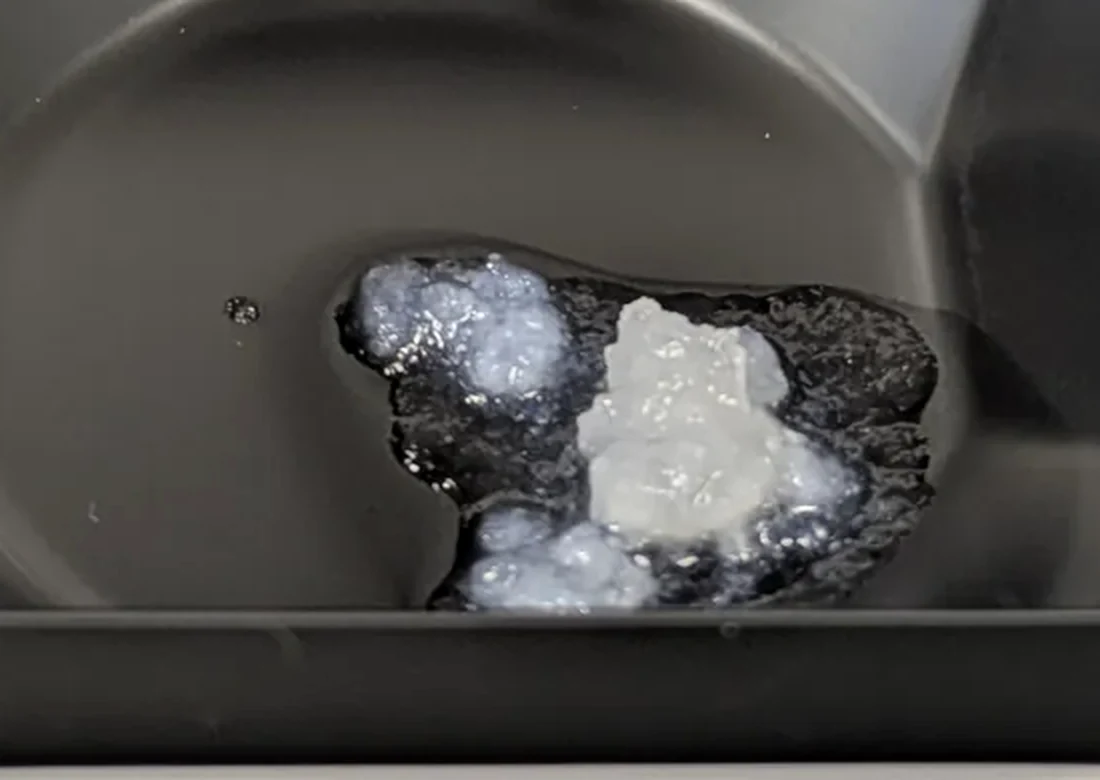
Swollen, taking up water
Technical details
Pressure-driven membrane processes generate the driving force with hydraulic pressure. Thermal processes evaporate water. HydroDefine uses osmotic pressure generated by a thermoresponsive hydrogel. Low-temperature heat releases the water from the hydrogel. Electricity is mainly needed for pumps, control and auxiliary equipment. For comparison, membrane distillation needs 80 to 100 kWh of heat per cubic metre in the cited reference.
The membrane separates by size, with an effective separation scale of about 1 nm. Long-chain PFAS such as PFOS and heavy metal ions such as lead, cadmium and nickel fall within the addressed range. Proof in the HydroDefine setup will come from real water streams.
Water flux: 1.7 LMH measured in the lab at 2 g/L sodium chloride, 1.4 LMH used for design. The more salt the water carries, the more slowly it passes through.
At suitable sites, the remaining electricity demand can be met locally, enabling operation that is largely independent of the power grid.
The next step: a system for industry.
By 2028 we plan to build a demonstrator and test HydroDefine on real water streams. Treatment capacity can be increased by adding modules.
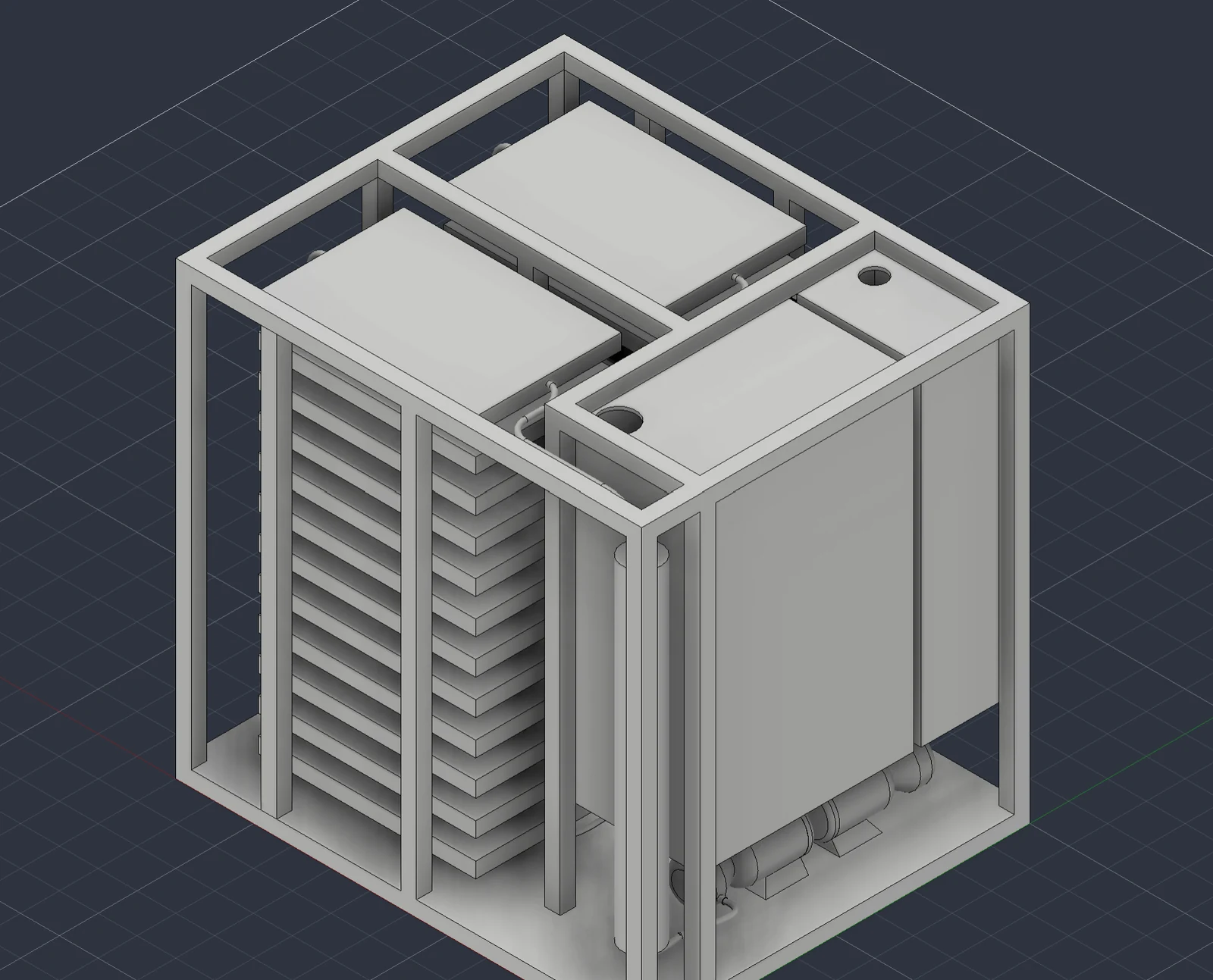
From research to industry
- Patent granted
- SPRIND validation underway
- Demonstrator planned for 2028
Full timeline
- 2021 to 2024 Foundations in the predecessor project
- June 2025 Patent filed
- since December 2025 Validation contract with SPRIND
- June 2026 International filing
- August 2026 Patent granted
- August 2026 Selected for the BRYCK Startup Alliance Accelerator
- 2027 Company formation (planned)
- 2028 Demonstrator and validation under real conditions (planned)
- May 2028 IFAT Munich (planned)
The team

Martin Wermuth
Business leadership, strategy, financing and market development.
Background
MBA from Durham University Business School. Around ten years in financial services, including eight at an investment manager whose assets under management grew to around one billion US dollars. Worked in the private equity team while also leading IT and international operations. Previously at Salomon Brothers and Citibank.
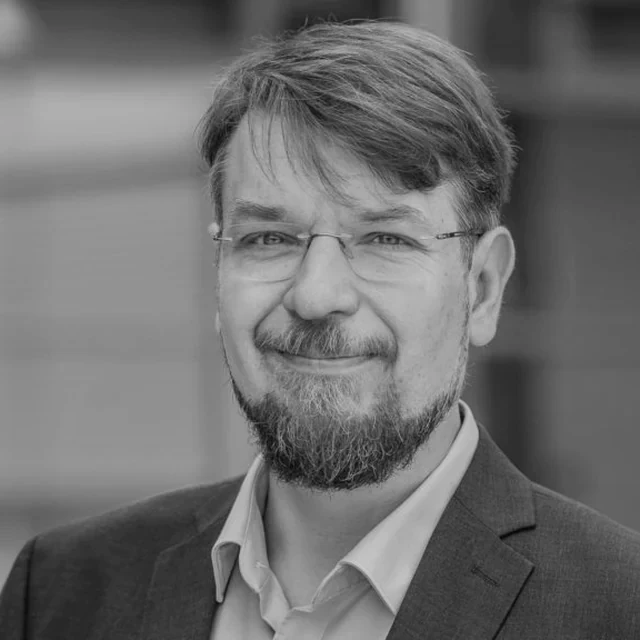
Prof. Dr. Sebastian Seiffert
Scientific mentor, designated scientific and technical lead.
Background
Professor of Physical Chemistry of Polymers at Johannes Gutenberg University Mainz. Spokesperson for a Collaborative Research Centre on hydrogels. Co-inventor of the granted patent.

Dr. Anupam Das
Membrane development and characterisation.
Background
Chemist with more than thirty publications, focused on thin-film composite membranes for forward osmosis. Responsible for membrane selection and characterisation.

Sebastian Seitel
Hydrogel development and scale-up.
Background
Chemist with a research stay at the Massachusetts Institute of Technology and five first-author publications. Develops the thermoresponsive gels that take up and release the water.
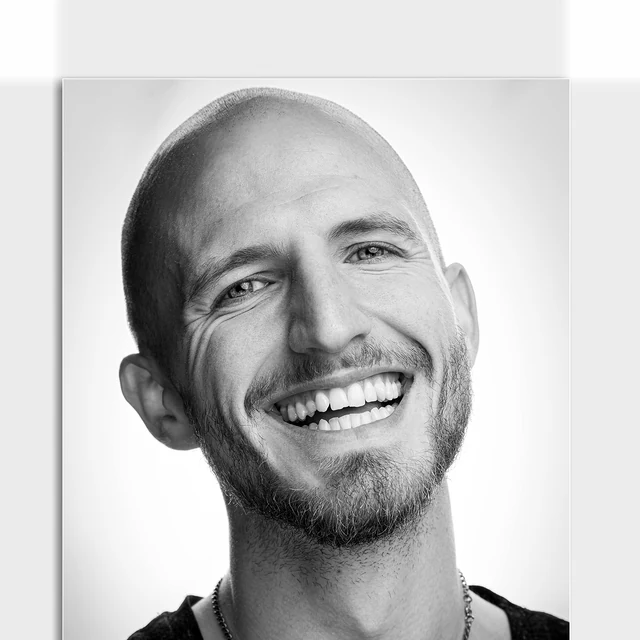
Christian Freiberger
Demonstrator, systems development and industrialisation.
Background
Developed a two-component printing system for additive manufacturing. Responsible for the design of the demonstrator and the path from lab setup to industrial system.
Show us the water stream that's expensive to treat today.
Or the heat your site has no use for. That's where we want to start.
Discuss a use caseTalk about integrationStart a technical conversation
Useful for a first conversation
- Type of water stream and what it contains
- Volume per day and whether it occurs continuously
- Available heat and its temperature level
- Current cost of treatment or disposal, even roughly